
Garage Door Repair in Illinois
How garage door repair works in Illinois — springs, cables, rollers, tracks, sections. Signs, process, and what to look for. Call 123-456-7890.
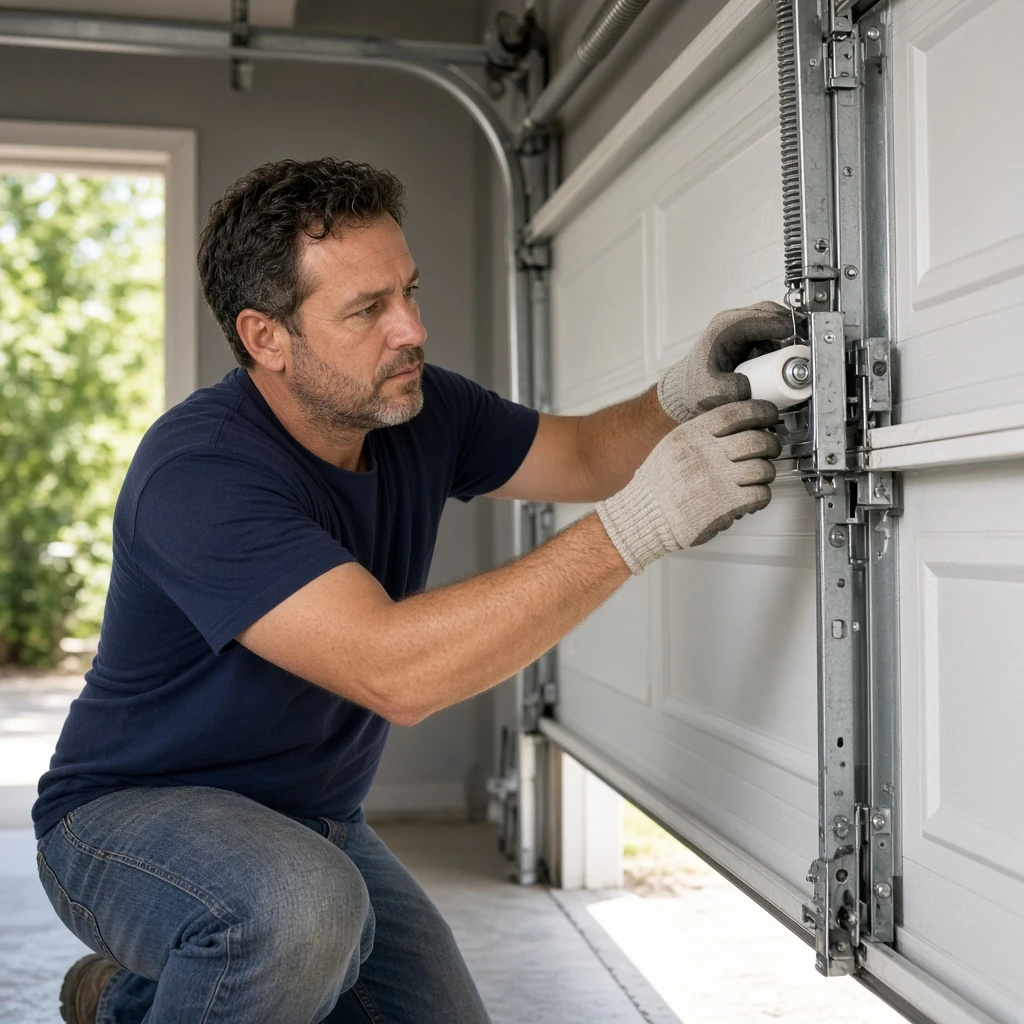
Garage door repair in Illinois covers the single-part failures that strand a door, and the state's winters cause most of them. At Chicago's O'Hare station the January mean is 25.2°F with about 6.5 days a year at or below zero under NOAA's 1991–2020 normals — cold that snaps springs, frays cables on rusted drums, and knocks doors off their rollers. Across the Chicago suburbs much of the housing dates to the 1950s through the 1980s, so a large share of doors are running original hardware at the end of its life. This page explains what repair covers, how it works, and what to look for; the city pages in the directory list the companies that do it. Call 123-456-7890 to reach a local garage door pro.
What Garage Door Repair Covers
Garage door repair restores the components that fail one at a time, as opposed to replacing the whole door. The common jobs on an Illinois door are a snapped spring, a broken or off-drum cable, a roller out of the track, a bent track, a cracked section, and worn hinges, bearings, or brackets. Each has its own cause and its own fix.
Spring Failures
The torsion or extension springs counterbalance the door's weight and take the hardest use, so they are the most common repair. A snapped spring leaves the door too heavy for the opener and is replaced — in a matched pair on a two-spring door — and sized to the door's weight. This is detailed under spring repair.
Cable and Drum Failures
The lift cables wind onto drums at each end of the torsion shaft. A cable frays where it runs over a rusted drum or a worn pulley, then snaps, and the door drops or hangs crooked. Repair replaces the cable and inspects the drum and bearings that caused the wear, since a new cable on a rough drum fails again.
Off-Track and Bent-Track Failures
A door jumps its track from a broken cable, a snapped spring, an impact, or a freeze-heaved slab that pushes the opening out of square. The rollers bind and the door hangs at an angle. Repair resets the door, replaces bent track or worn rollers, and corrects the cause — a door forced back onto a bent track simply derails again.
Section and Panel Damage
A single cracked or dented section — from a bumper, a ladder, or a storm — can often be replaced on its own if a matching panel is available, rather than replacing the whole door. When several panels are damaged or the match is discontinued, replacement is the better path.
Signs Your Garage Door Needs Repair
Several signs point to a repair rather than a tune-up. The door is suddenly heavy to lift by hand or won't lift at all. It opens or closes crooked, jerks, or stops partway. There is a loud bang from the garage — the sound of a spring snapping. The door is louder than it used to be, grinds, or shakes on the tracks. A visible gap shows in the spring above the door, or a cable hangs loose. Any of these means a part has failed and the door should be looked at before it fails completely.
How Garage Door Repair Works
First, the technician inspects the door and tests its balance by hand to find which part failed and why. Second, the door is secured so a wound spring or a loaded cable cannot release and cause injury. Third, the failed part is replaced with one sized to the door — springs in matched pairs, cables rated to the door weight, rollers and hinges to match. Finally, the door is rebalanced and the opener's force and auto-reverse are tested before the job is done. A good repair fixes the cause, not just the visible symptom, so the same fault does not return.
Why Illinois Doors Need Repair
Illinois doors need repair mostly because of the cold and the age of the hardware. Steel springs grow brittle as the temperature drops, so they snap in the deep-winter weeks, and thickened cold grease makes rollers drag and openers strain. The region's many 1950s–1980s homes are running original springs, cables, and rollers that are at or past their service life. Freeze-thaw adds a structural problem: water under the garage slab expands when it freezes and lifts the concrete, then drops it, so over several winters the opening goes out of square and the door binds and jumps the track. Road salt and winter damp also rust drums, hinges, and fasteners, which is why cable and bearing failures cluster in older garages.
DIY vs. a Professional Repair
A few maintenance tasks are safe to do yourself — lubricating rollers and hinges with a silicone or garage-door-specific lubricant, tightening loose bracket bolts, wiping the safety-sensor lenses, and clearing ice from the bottom seal. The failures that strand a door are not DIY. A torsion spring stores enough energy to cause serious injury, cables under load can whip free, and a door off its track is heavy and unstable. In Illinois cold these parts are more brittle and less predictable. Spring, cable, track, and section work should be left to a technician with winding bars and the right tools.
What to Look for in a Repair Company
A repair company worth calling carries liability insurance and shows proof on request, diagnoses the cause of a failure rather than only swapping the visible part, replaces springs in matched pairs sized to the door, inspects the parts that caused a failure (a rough drum behind a frayed cable, for instance), and tests the safety auto-reverse before leaving. A good company also tells you honestly when a repair is worth more than a replacement and when it is not. For rough figures, see the cost guide. Call 123-456-7890 to reach a garage door repair pro in Illinois.
Frequently Asked Questions
Repair fits a sound door with one failed part — a snapped spring, a frayed cable, a bent track, or a roller out of place. Replacement fits a door that is rotted, dented across several panels, or old enough that matching parts are hard to find. A technician inspects the door and its balance and tells you which is the better value, since a single-part repair on a good door costs far less than a new door. Many Illinois doors just need a part, not a replacement.
Some maintenance is DIY — lubricating rollers, tightening brackets, wiping sensor lenses, clearing ice from the seal. The common failures are not. A torsion spring is wound under high tension and can cause serious injury, cables under load can whip free, and a door off its track is heavy and unstable. In Illinois cold these parts are more brittle, so spring, cable, and track repairs should be left to a technician with the right tools. Call 123-456-7890.
Winter breaks garage door parts because cold steel loses flex and grease thickens. At the O'Hare station the January mean is 25.2°F under NOAA's 1991–2020 normals, with about 6.5 days a year at or below zero. A spring near the end of its roughly 10,000-cycle life snaps in that cold, a frozen bottom seal makes the opener strain until a cable or gear gives out, and freeze-heaved slabs push doors out of square. This is why repair calls spike on the first hard freeze.
Most single-part repairs — a spring, a cable, a set of rollers — are completed in one visit once the technician has diagnosed the fault and has the right parts, often in an hour or two. A door off its track, a multi-part failure, or a section replacement that needs a matching panel ordered takes longer. Because this directory lists companies rather than scheduling the work, the company you reach confirms the timing for your specific repair. Call 123-456-7890.
The most common Illinois repair is a broken torsion spring, because the springs take the hardest use and cold steel snaps in winter. After springs, the frequent calls are frayed or broken cables (often from rusted drums), doors off their tracks (from a broken cable, an impact, or a freeze-heaved slab), worn rollers that make the door loud, and opener faults. Many of these travel together — a broken spring can drop a cable and knock the door off track in one failure.
Often, yes, for common failures where the company has the parts on hand — springs, cables, and rollers are usually stocked. A section replacement that needs a matching panel, a discontinued part, or a custom door can take longer because the part must be sourced. This directory lists companies rather than booking the work, so the company you reach gives you its availability. Leave a door with a broken spring down until it is fixed. Call 123-456-7890.
A garage door gets loud from worn rollers, dry or worn hinges and bearings, loose hardware, or a door that has shifted out of square. In Illinois, cold-thickened grease and rust on old rollers and bearings make the noise worse through winter. Grinding or scraping points to the rollers or an out-of-square track, while a rhythmic slap often means a loose chain or a worn opener drive. A technician can trace and quiet the source rather than just re-lubricating it.
Call Now for Garage Door Repair in Illinois
To reach a garage door repair company serving your Illinois town, call 123-456-7890.
Call now to reach a garage door pro in Illinois.
One call reaches a local company for repair, spring replacement, opener service, installation, and replacement. No forms — just a phone number.