
Garage Door Repair vs. Replacement: How to Decide
When to repair a garage door and when to replace it — signs, a cost comparison, and the Illinois angle. Call 123-456-7890 for a local pro.
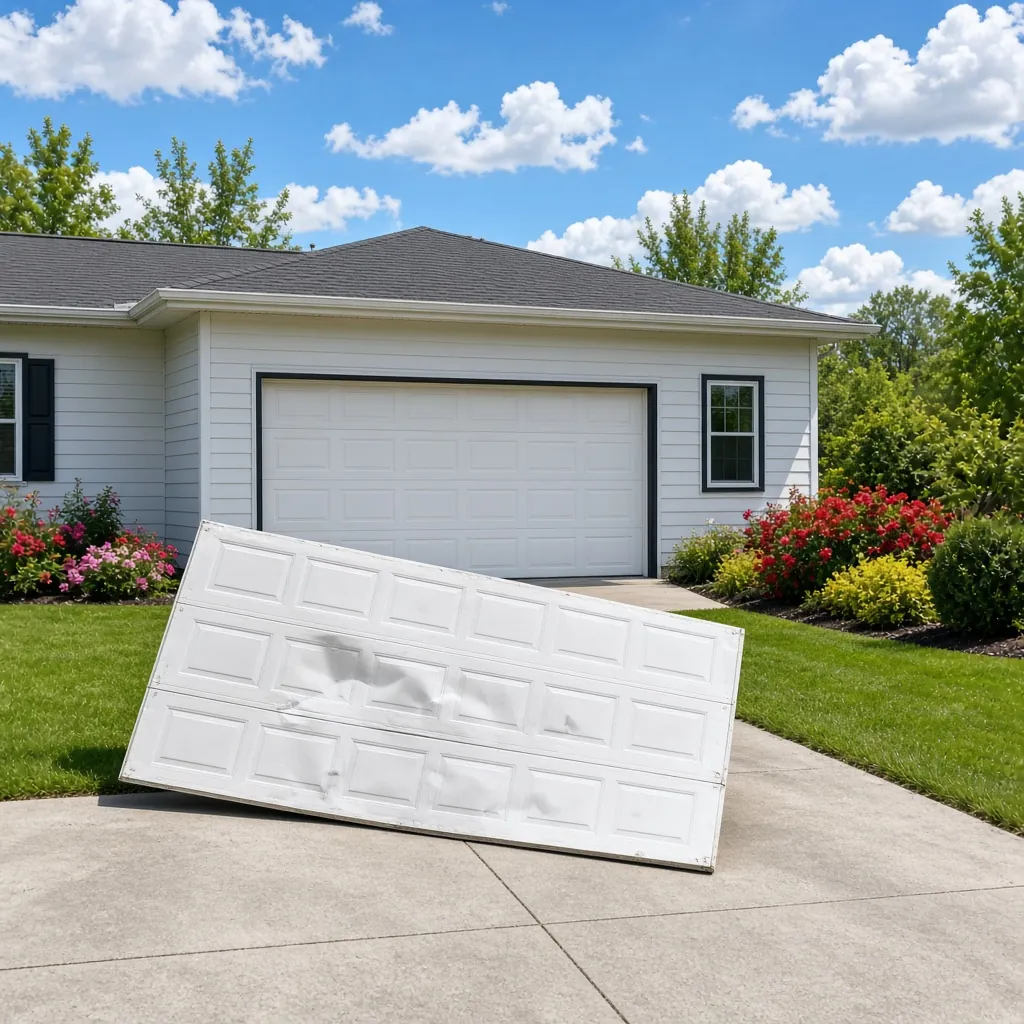
The rule of thumb is simple: repair a single failed part on a sound door, and replace a door that is worn out, damaged across panels, or costing you repeated repairs. Most Illinois garage door calls are repairs — a snapped spring, a frayed cable, a bent track — but across the Chicago suburbs many doors are decades old, so replacement comes up often. This guide gives you the signs for each, a cost comparison, a quick way to score the decision, and the Illinois-specific factors that tip more doors toward replacement than a mild climate would.
The Short Answer
Repair if the door itself is solid and just one part failed. Replace if the door is rusted or dented across several panels, warped past balancing, old enough that matching parts are scarce, or on its third or fourth repair. A repair is a few hundred dollars; a new door is $600 to $4,000 installed depending on size and material, per the cost guide. The decision is about the door's overall condition and age, not just the current failure.
When to Repair
Repair is the right call when a sound door has a single-part failure:
- A snapped or weak spring — the most common Illinois repair, especially in winter.
- A frayed or broken cable, or a cable off its drum.
- A door off its rollers or a bent track from an impact or freeze-heave.
- A worn opener part — a gear, a sensor, a capacitor, a board.
- Noisy operation from worn rollers or dry hinges.
- A single cracked section on an otherwise good door, where a matching panel is available.
In each case the door still has years of life, so fixing the part is far cheaper than a new door. See garage door repair.
When to Replace
Replacement becomes the better value when the door itself is the problem:
- Rust or rot across several panels, common on older uninsulated Illinois doors.
- Dents that stop the door sealing or tracking properly, or spread across the face.
- A door too warped to balance, so it binds no matter how it is adjusted.
- Repeated repairs — a door on its third or fourth fix in a few years.
- Parts that are hard to match on a door decades old.
- A single-layer door losing heat on an attached garage, or a dated look hurting curb appeal.
A new insulated door also cuts winter heat loss and updates the home's street face, so some homeowners replace a dated door by choice. See garage door replacement.
A Quick Way to Score It
If you're on the fence, count the yes answers: Is the door more than 20 years old? Has it needed two or more repairs in the last few years? Is there rust or damage on more than one panel? Is it a single-layer, uninsulated door on an attached garage? Are matching parts hard to find? One or two yes answers usually still favor a targeted repair. Three or more tilt toward replacement, because the repairs will keep coming and a new insulated door starts paying back in comfort and curb appeal.
A Simple Cost Comparison
| Situation | Usual path | Rough 2026 range |
|---|---|---|
| One snapped spring, sound door | Repair | $150–$500 |
| Worn opener, good door | Repair or new opener | $120–$750 |
| One dented panel, rest solid | Repair (panel) | $200–$800 |
| Frayed cable + worn rollers | Repair | $150–$500 |
| Rust/dents across panels, repeated fixes | Replace | $600–$4,000 installed |
| Dated single-layer door, attached garage | Replace (insulated) | $800–$4,000 installed |
Ranges are 2026 national figures adjusted for Chicago-area labor; see the cost guide for sources and detail.
The Illinois Angle
Illinois winters tilt more doors toward replacement than a mild climate would. Cold, snow, road salt, and freeze-thaw rust hardware, dent thin panels, and wear seals, so an uninsulated door ages faster here. The region's many 1950s–1980s homes also have doors near or past their 15-to-30-year life. At the same time, the springs and opener wear on their own clocks — about 10,000 cycles for a spring, 10 to 15 years for an opener — so a single part can fail on a door that is otherwise fine. That combination is why a technician's on-site assessment beats any blanket rule: the same symptom can mean a $300 repair on a good door or the last straw on a worn-out one.
The Insulation and Curb-Appeal Factor
Two things push Illinois homeowners to replace a door that could still limp along on repairs. First, insulation: a single-layer door loses heat, and swapping to a two- or three-layer insulated door keeps an attached garage and the rooms around it warmer through a 25.2°F January, cutting the heating load. Second, curb appeal: the door is a large share of the home's front, and a new door is consistently among the strongest home improvements for cost recovery. On the North Shore and in the DuPage and Lake County markets, a dated door drags down an otherwise updated house.
Frequently Asked Questions
For a single failed part on a sound door, repair is far cheaper — a spring, cable, or roller job runs a few hundred dollars, while a new door is $600 to $4,000 installed depending on size and material. Replacement becomes the better value when the door needs repeated repairs, is rusted or dented across panels, or uses parts that are hard to match. A technician can weigh a specific repair against a new door for your situation. See the cost guide.
A steel garage door often lasts 15 to 30 years, though Illinois winters shorten that because cold, salt, and freeze-thaw rust hardware and dent panels. The springs and opener wear separately — about 10,000 cycles for a spring and 10 to 15 years for an opener — so you may replace those parts more than once over the life of the door itself. A door past 25 years that needs work is usually a replacement candidate rather than another repair.
Not for function — each door stands alone mechanically, so a bad door can be replaced without touching a good one. Many homeowners replace both at once for a matched look, since the doors are a large share of the home's front and a single new door next to a faded old one stands out. On a two-car garage with two single doors this is common. It is a curb-appeal choice, not a mechanical requirement; a technician can advise on matching a new door to an existing one.
A new garage door is consistently among the home improvements with the strongest cost recovery, because the door dominates a home's street-facing appearance. On the Chicago suburbs' established blocks, where many doors are dated, a new insulated door noticeably updates the façade and improves garage insulation. The exact return depends on the home and door, but curb appeal and energy savings are the main gains, and both help at resale.
At 15 years a door is in the gray zone, so it comes down to condition. If the panels are solid and it is the first major failure — a spring or a cable — a repair is usually the better value and buys several more years. If the door is also rusted, dented, poorly insulated, or has needed repairs before, 15 years is a reasonable point to replace, especially with an insulated door for the Illinois winter. A technician can assess the overall condition, not just the broken part.
It can, for an attached garage. A single-layer door loses heat, so replacing it with a two- or three-layer insulated door keeps the garage and the rooms above or beside it warmer through the winter and reduces the heating load. Better seals on a new door also stop the drafts that gap around an old, warped one. The savings depend on how the garage connects to the living space, but for an attached garage in Illinois the insulation gain is real, not just cosmetic.
Call Now to Decide for Your Door
For a straight assessment of whether to repair or replace your door, call 123-456-7890 to reach a garage door company in Illinois.
Call now to reach a garage door pro in Illinois.
One call reaches a local company for repair, spring replacement, opener service, installation, and replacement. No forms — just a phone number.