
Why Your Garage Door Won't Close in the Cold
Why an Illinois garage door won't close in winter — frozen seals, sensors, springs, drag — how to diagnose it, and how to prevent it. Call 123-456-7890.
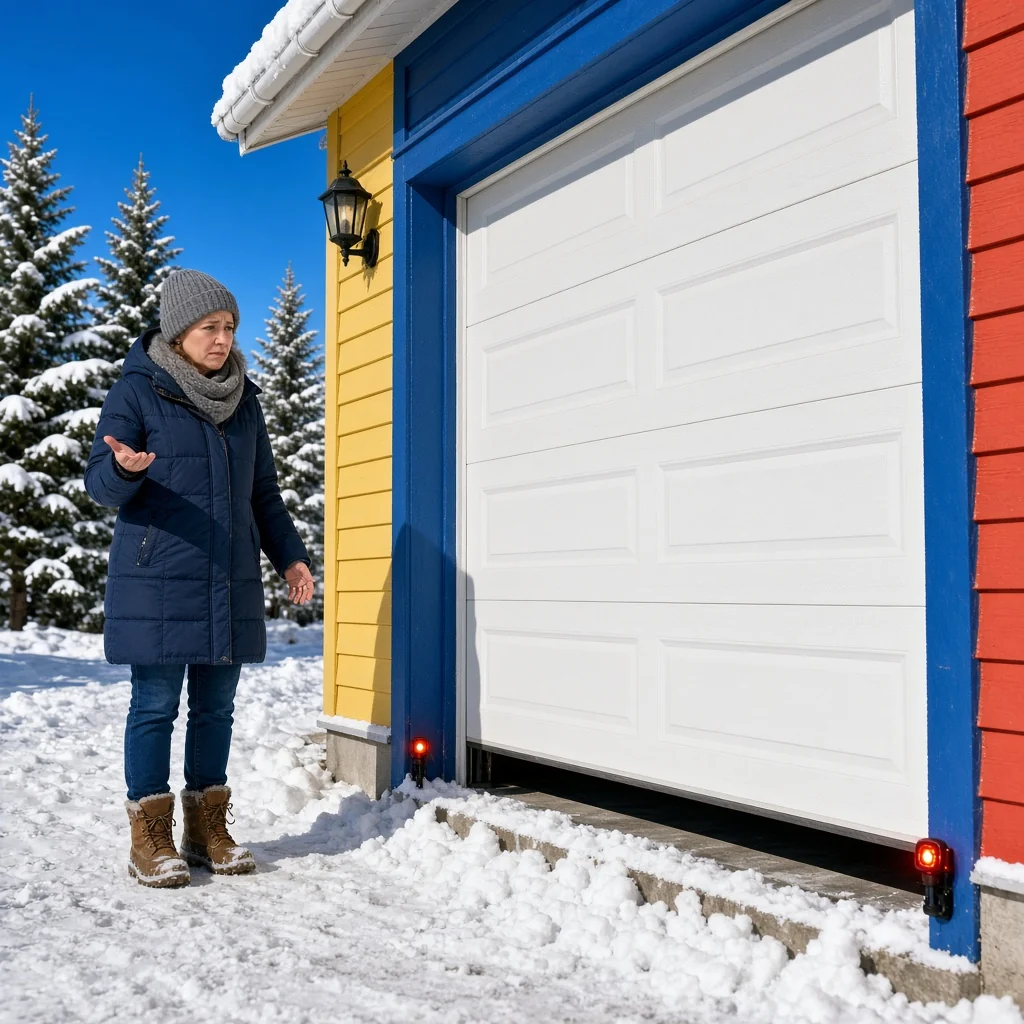
An Illinois garage door that won't close on a freezing morning is almost always fighting one of a handful of cold-weather problems: a bottom seal frozen to the slab, misaligned safety sensors, a weak or broken spring, cold-thickened drag on the rollers, or an opener struggling in the cold. The weather is the common thread — at Chicago's O'Hare station the January mean is 25.2°F with about 6.5 days a year at or below zero, per NOAA's 1991–2020 normals. This guide walks through each cause, how to tell them apart, what is safe to try yourself, and how to stop it happening again.
The Short Answer
Most often the rubber bottom seal has frozen to the concrete overnight, so when the opener tries to close the door it senses the resistance and reverses to protect itself. Freeing the seal usually fixes it. If the seal is clear, work through the other causes below in order — sensors, then balance and spring, then roller drag — or call a technician, since a heavy door or a blinking sensor points to a repair rather than a quick fix.
Match the Symptom to the Cause
| What the door does | Most likely cause |
|---|---|
| Starts to close, then reverses immediately | Misaligned or blocked photo-eye sensor |
| Won't move at all, opener hums | Frozen bottom seal or broken spring |
| Heavy to lift by hand, opener strains | Weak or broken spring |
| Closes slowly, grinds or shakes | Cold-thickened grease, worn rollers |
| No response from remote, works on wall button | Cold-drained remote battery |
Use the table to narrow it down, then read the matching section.
Cause 1: A Frozen Bottom Seal
The rubber strip along the bottom of the door seals out drafts, and in winter it is the first thing to freeze to the slab. Snowmelt or condensation pools under the door, refreezes overnight, and glues the seal to the concrete. When the opener pulls, the door won't budge or reverses. Chipping the ice free gently and clearing water from under the door usually releases it. A silicone-based lubricant on the seal resists refreezing better than a water-based one. Do not keep forcing the opener against a frozen seal — it can tear the seal, bend the bottom section, or strip the opener's drive gear.
Cause 2: Misaligned Safety Sensors
Every opener since the 1993 photo-eye mandate has two sensors near the floor that stop the door if something crosses the beam. Cold weather shifts tracks and brackets, and a bumped or frosted sensor throws the beam out of line, so the door reverses before it closes — often the door closes partway, stops, and goes back up. Check that both sensor lights are steady, not blinking, and wipe any frost, cobwebs, or dirt from the lenses. Make sure nothing (a trash can, a coiled hose, a snow shovel) is breaking the beam. If a light still blinks after cleaning, the sensors need realigning — a quick job for a technician.
Cause 3: A Weak or Broken Spring
The springs, not the opener, carry the door's weight. Cold steel loses flex, so a spring near the end of its roughly 10,000-cycle life is weakest exactly when it is coldest. A weak spring leaves the door heavy, the opener strains and reverses, and a fully broken spring stops the door entirely — often after a loud bang in the garage. Test it by pulling the emergency release and lifting the door by hand: a balanced door lifts easily and stays put halfway, while a heavy door that drops means the spring. Do not keep running the opener against a heavy door — it burns out the motor. This is a job for spring repair.
Cause 4: Cold-Thickened Drag and Worn Rollers
Below freezing, the grease on rollers, hinges, and the opener track thickens, so the door drags and the opener works harder on every lift. On older Illinois doors with worn steel rollers the drag is worse, and the door closes slowly, grinds, or shakes. Fresh lubrication with a garage-door-specific or silicone lubricant on the rollers, hinges, and springs helps, and worn rollers can be swapped for quieter nylon ones. If the door still drags after lubing, the tracks may be out of square from a freeze-heaved slab, which needs a technician.
Cause 5: A Cold-Drained Remote Battery
A simpler one: cold drains remote and keypad batteries fast, so a door that won't respond to the remote but works from the wall button often just needs a fresh battery. Keep a spare, and bring a keypad's cover closed against the weather. If both the remote and the wall button fail, the problem is the opener or its power, not the battery.
What's Safe to DIY vs. Call a Pro
Safe to try yourself: free a frozen seal, wipe and check the sensors, clear the beam, lubricate rollers and hinges, replace a remote battery. Call a pro for: a door heavy by hand (spring), a sensor that won't realign, a door off its track, a cable hanging loose, or any grinding that lubrication doesn't fix. Springs and cables store enough energy to injure, so those are never DIY. If your door won't close and the seal is clear, call 123-456-7890 to reach a local garage door pro; see garage door repair in Illinois for what the fix involves.
Preventing Winter Door Problems
A short fall tune-up prevents most of this: lubricate the rollers, hinges, and springs with a silicone or garage-door lubricant before the first freeze; clear and treat the bottom seal so it won't bond to the slab; wipe and check the sensors; make sure water drains away from the door; and have a door that is already heavy or noisy looked at before winter rather than during it. Replacing a spring near the end of its life in the fall is cheaper and easier than during a January cold snap.
Frequently Asked Questions
A door that reverses just before closing almost always has a misaligned or blocked photo-eye sensor near the floor. Cold weather shifts the tracks and brackets, and frost or dirt on a lens throws the beam out of line, so the opener thinks something is in the way. Check that both sensor lights are steady and wipe the lenses, and clear anything breaking the beam. If a light still blinks, the sensors need realigning, which a technician can do quickly.
Keep water from pooling under the door and treat the seal with a silicone-based lubricant, which resists refreezing better than a water-based product. Clearing snow and ice from just inside and outside the door helps, as does making sure the garage floor drains away from the door. If the seal has already frozen, chip the ice free gently rather than forcing the opener, which can tear the seal or bend the bottom section of the door.
Yes. Forcing the opener against a door frozen to the slab can tear the bottom seal, bend the lowest section, or strip the opener's drive gear, turning a simple frozen-seal problem into a repair. If the door resists, stop and free the seal first. If the door is heavy even after the seal is clear, the spring is likely the issue, and running the opener against a weak or broken spring can burn out the motor.
A garage door that is heavy to lift by hand usually has a weak or broken spring. The springs counterbalance the door's weight, and cold steel loses flex, so a spring near the end of its roughly 10,000-cycle life is most likely to weaken or snap in deep cold. Test it by pulling the emergency release and lifting the door by hand — a balanced door stays put halfway, a heavy one that drops means the spring. Stop using the opener and call for spring repair.
Yes. Cold temperatures reduce battery capacity, so remote and keypad batteries drain faster in winter and a weak battery can fail on a cold morning. If the door won't respond to the remote but works from the wall button, a fresh battery usually fixes it. If both the remote and the wall button fail, the problem is the opener or its power supply, not the battery, and that needs a closer look.
Yes. A light coat of garage-door-specific or silicone lubricant on the rollers, hinges, springs, and the opener track before the first freeze keeps the door moving smoothly when the cold thickens the old grease. Avoid heavy grease or WD-40, which attract dirt and gum up in the cold. Lubricating in the fall, along with checking the seal and sensors, prevents most of the winter problems that otherwise strand a door in January.
Call Now for Garage Door Repair in Illinois
If your garage door won't close and the seal is clear, call 123-456-7890 to reach a garage door repair company in Illinois.
Call now to reach a garage door pro in Illinois.
One call reaches a local company for repair, spring replacement, opener service, installation, and replacement. No forms — just a phone number.